
Why Use a Proxy Server? Complete Guide for 2025
Focus Keyword: Proxy Server
Updated for 2025 — A Proxy Server is one of the most versatile tools for anyone who values privacy, performance, and control online. From protecting your identity to accelerating content delivery, proxies have become essential for businesses, developers, and everyday users. This article explains, in simple and practical terms, why you should use a Proxy Server and how it can make your online experience faster and safer.
What Is a Proxy Server?
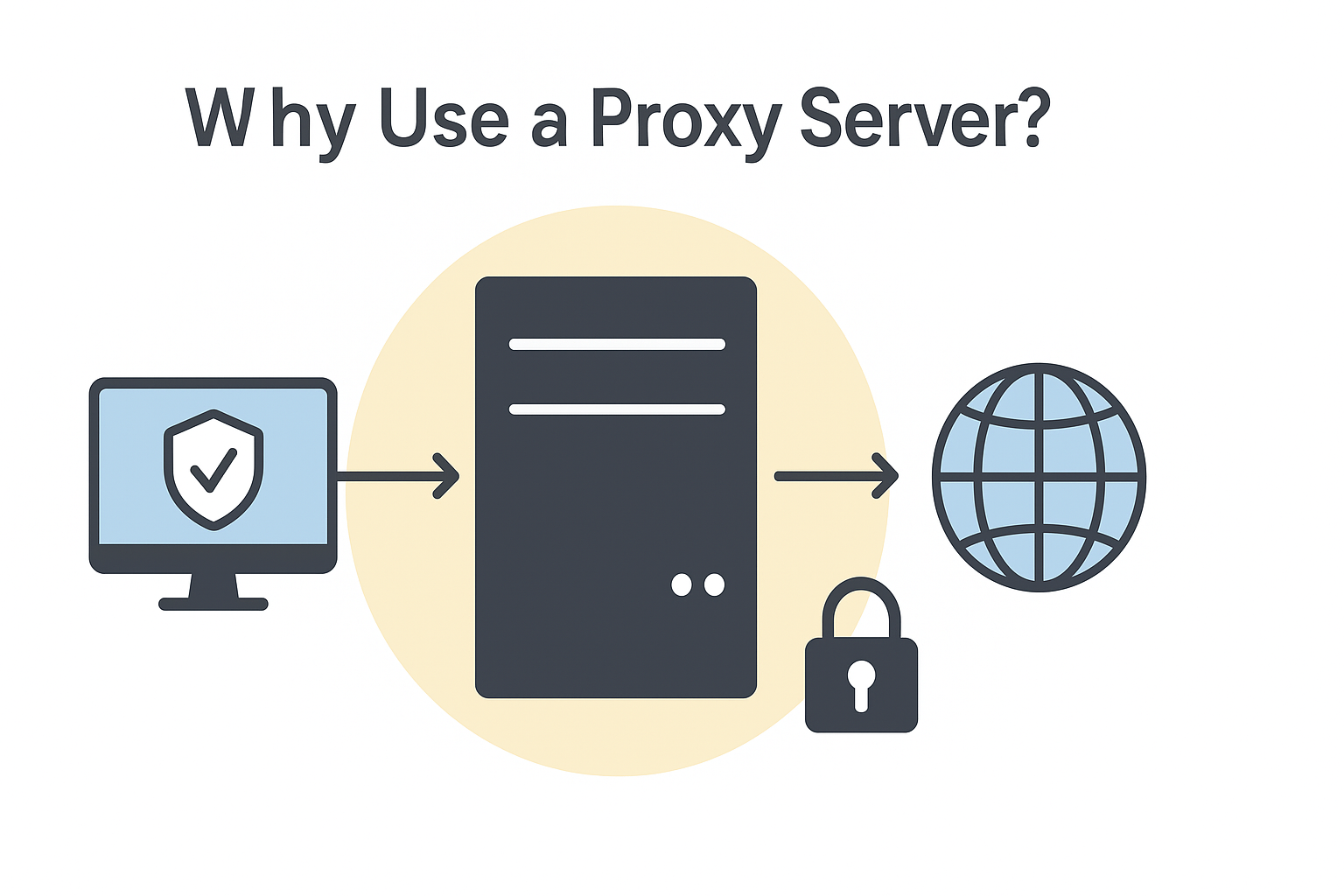
A Proxy Server is an intermediary that connects your device to the internet on your behalf. When you use a proxy, your web requests go through this server first, which hides your real IP address and can modify or filter traffic according to your needs. This setup allows you to access content, improve speed, and enhance online security.
Example: When you browse a website using a proxy, the site sees the proxy’s IP, not yours — helping maintain privacy and bypass restrictions.
Why Use a Proxy Server?
The reasons to use a Proxy Server in 2025 go far beyond privacy. Modern proxies help businesses, marketers, developers, and individuals manage data, optimize speed, and enhance cybersecurity. Here are the top benefits explained in detail:
1. Protect Your Online Privacy
When you connect directly to websites, your IP address reveals your location and device information. A Proxy Server hides that data by acting as a buffer between you and the site. This helps you stay anonymous online and prevents tracking by advertisers or cybercriminals.
For advanced anonymity, many users combine proxies with VPNs or pay for proxies using Bitcoin to keep transactions private.
2. Bypass Geo-Restrictions and Censorship
Access to content varies by region, and many platforms restrict users based on IP location. Using a Proxy Server located in another country allows you to bypass such restrictions. This is especially useful for streaming, gaming, and global business operations.
- Watch region-locked streaming services
- Access restricted websites in your country
- Test international SEO campaigns
3. Boost Connection Speed and Performance
A Proxy Server can cache frequently accessed data, reducing load times for returning users. Datacenter proxies, in particular, provide ultra-fast connections that are ideal for automation tasks or sneaker copping in 2025.
When paired with a VPS server, proxies deliver optimized performance even for large-scale scraping or e-commerce monitoring.
4. Enhance Security for Businesses
Companies use Proxy Servers to protect their internal systems from external threats. By routing requests through proxies, they can monitor, filter, and block malicious traffic before it reaches the corporate network.
Reverse proxies, in particular, help protect backend servers from DDoS attacks and unauthorized access, making them a cornerstone of enterprise cybersecurity.
5. Control Employee Internet Usage
Organizations use Proxy Servers to manage and restrict employee access to certain websites. This prevents misuse of resources and improves productivity.
Proxies also log network activity, helping administrators audit traffic and maintain compliance with company policies.
6. Support Web Scraping and Data Collection
For developers and marketers, a Proxy Server is essential for gathering web data safely. Proxies allow bots to rotate IPs, avoid bans, and extract market insights without triggering anti-scraping systems.
- SEO data collection
- Price comparison monitoring
- Market research and analytics
7. Improve Online Gaming and Sneaker Copping
Gamers and sneaker enthusiasts use Proxy Servers to reduce lag, access foreign servers, or automate purchases. Datacenter proxies are ideal for speed, while residential proxies offer stealth for exclusive releases.
Proxy Server Types Explained
| Type | Description | Best For |
|---|---|---|
| Residential Proxy | Uses IPs assigned by ISPs, mimicking real user behavior. | Web scraping, SEO, stealth access |
| Datacenter Proxy | High-speed IPs from data centers. | Automation, sneaker copping, bulk operations |
| Rotating Proxy | Changes IP automatically after each request. | Anonymous web crawling |
| Reverse Proxy | Protects backend servers from exposure. | Corporate and web app security |
8. Balance Network Load Efficiently
A Proxy Server can distribute network requests across multiple servers. This prevents overload, keeps websites responsive, and ensures uptime during high traffic events — a crucial benefit for e-commerce platforms in 2025.
9. Secure Online Transactions and Payments
Using a Proxy Server adds an extra layer of anonymity when performing online transactions. Many privacy-focused users pay for proxies or VPS services using Bitcoin to ensure their personal data stays secure and untraceable.
10. Enable AI Tools and Automation Safely
Modern AI tools for marketing, analytics, or automation rely on proxies to collect data without being blocked. By distributing requests across many IPs, AI bots can safely access public web data while complying with platform limits.
Pros and Cons of Using a Proxy Server
| Pros | Cons |
|---|---|
| Improved online privacy | Some free proxies log user data |
| Bypass geo-restrictions | May reduce connection speed if overloaded |
| Supports automation tools | Requires setup and maintenance |
| Enhances security and load balancing | Paid proxies can be costly for large-scale use |
FAQ – Why Use a Proxy Server?
1. Is a Proxy Server better than a VPN?
It depends. A VPN encrypts all traffic, while a Proxy Server routes specific connections. Proxies are faster for targeted tasks like web scraping or streaming.
2. Are free Proxy Servers safe?
No. Free proxies often log or sell your data. It’s safer to use paid or private proxies from reputable providers.
3. Can I use a Proxy Server with a VPS?
Yes. Hosting proxies on a VPS ensures stable speed, uptime, and full configuration control.
4. Do Proxy Servers work with AI tools?
Absolutely. AI-driven bots and analytics tools use proxies to handle bulk data requests safely and efficiently.
5. What’s the best Proxy Server type for beginners?
Residential proxies are great for privacy and general browsing, while datacenter proxies are best for speed and automation.