
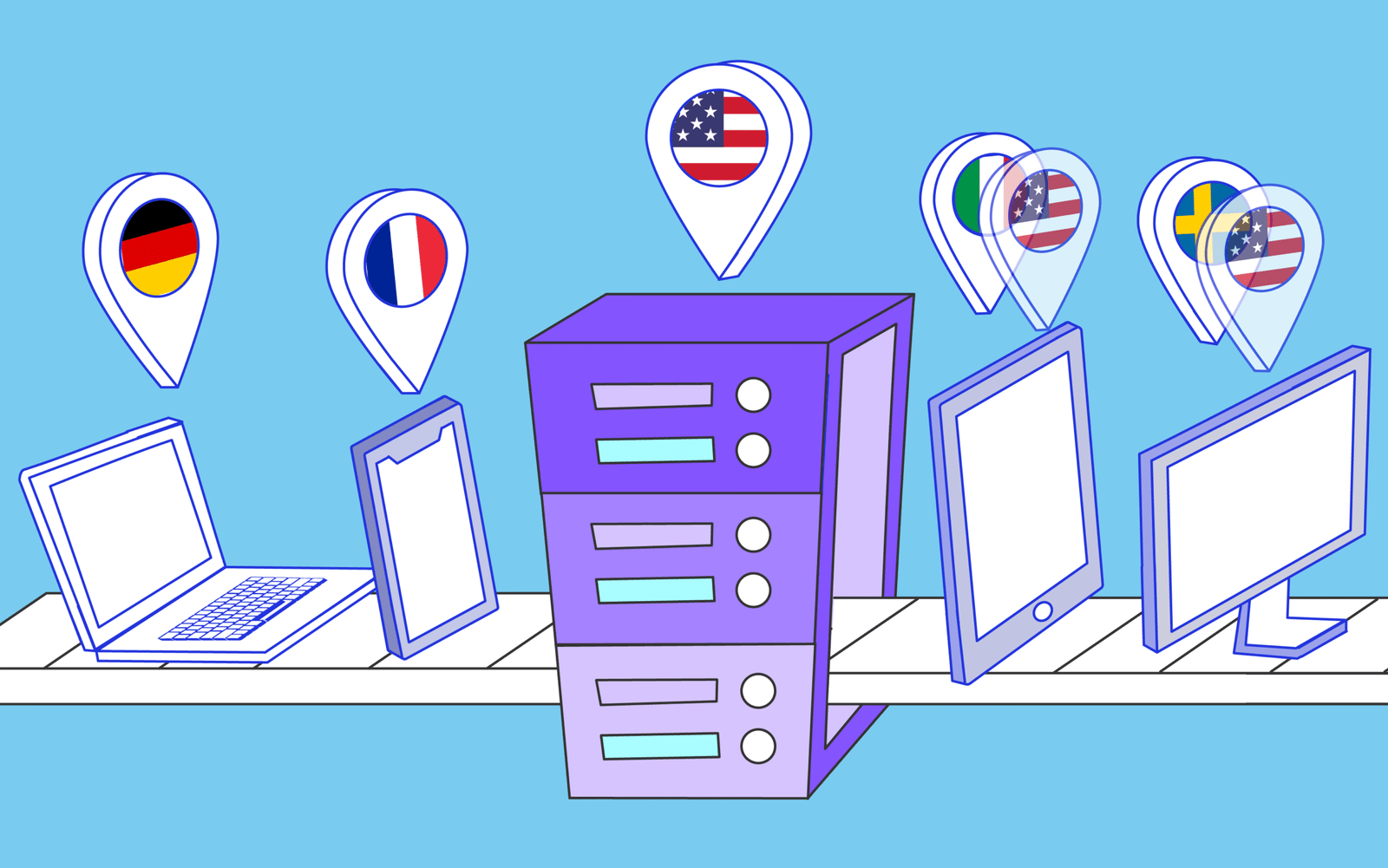
The Rise of AI-Driven Proxies: How Machine Learning is Changing Web Scraping in 2026
From simple IP rotation to generative behavioral mimicry. Discover how machine learning models are defeating JA4+ fingerprinting and reshaping the data collection industry.
“In 2026, the proxy is no longer a passive pipe. It is an active, intelligent agent that negotiates access to information on your behalf using advanced Machine Learning.”
The digital ecosystem of 2026 is vastly different from the internet of the early 2020s. For data engineers and SEO specialists, the “Gold Rush” era of easy data collection has ended. We have entered the era of Algorithmic Warfare.
Five years ago, bypassing a website’s defenses was a game of volume. If you purchased a large enough pool of residential IPs and rotated them frequently, you could brute-force your way through most firewalls. This strategy, known colloquially as “Rotation Roulette,” relied on the assumption that target websites couldn’t ban IPs faster than you could buy them.
Today, that assumption is dead. Modern defensive systems—powered by AI giants like Cloudflare, Akamai, and DataDome—don’t just ban IPs. They analyze the entropy of your mouse movements, the cryptographic signature of your TLS handshake, and the timing variance of your keystrokes. They can identify a bot coming from a pristine residential IP in less than 50 milliseconds.
To survive, the data collection industry had to evolve. The result is the emergence of AI-Driven Proxies. This article provides a comprehensive technical analysis of how Machine Learning is reshaping web scraping in 2026.
2. Defining AI-Driven Proxies in the Modern Web

An AI-Driven Proxy (often marketed as an “Unblocker” or “Web Unlocker”) is a sophisticated software layer that sits between the scraper and the target website. Unlike traditional proxies that simply mask the IP address, AI proxies actively modify the request to ensure success.
Think of a traditional proxy as a mask: it hides your face, but if you act like a robot, you will still be caught. An AI-Driven Proxy is a professional actor. It doesn’t just wear a mask; it adopts a persona. It manages cookies, executes JavaScript, solves CAPTCHAs using computer vision, and generates synthetic human behavior.
For a broader look at the tools utilizing these proxies, you can review our comprehensive hosting and tool reviews.
Core Capabilities of AI Proxies
- 1. Intelligent Routing: Using Reinforcement Learning to predict which specific IP subnet has the highest probability of success for a specific domain at a specific time of day.
- 2. Fingerprint Management: Dynamically rewriting the TCP/IP stack and TLS handshake to mimic the exact version of Chrome or Safari claimed in the User-Agent.
- 3. Auto-Healing: Automatically retrying failed requests with different parameters (headers, cookies, IPs) without the developer needing to write retry logic.
3. The 2026 Anti-Bot Landscape (JA4+)
To understand why AI-Driven Proxies are necessary, we must examine the defensive technology they are designed to defeat. In 2026, the industry standard for bot detection is JA4+ Fingerprinting.
Understanding TLS Fingerprinting
When a browser connects to a secure website (HTTPS), it initiates a “handshake.” The client sends a ClientHello packet containing information about supported encryption ciphers, extensions, and compression methods.
Standard automation libraries like Python’s requests, Node.js’s axios, or even older versions of Puppeteer send ClientHello packets that are distinctively non-human. They might list ciphers in a different order than a real Chrome browser, or support outdated encryption standards.
Anti-bot systems create a hash (fingerprint) of this handshake. If the fingerprint matches a known bot library, the connection is dropped at the TCP level—before the scraper even sends a single HTTP header. AI proxies utilize Network Stack Emulation to rewrite these packets at the kernel level, ensuring the TLS fingerprint matches the emulated browser perfectly.
4. How Machine Learning Optimizes Web Scraping
The integration of Machine Learning (ML) into proxy infrastructure has shifted the paradigm from “static rules” to “adaptive behaviors.” Here is how different ML disciplines are applied:
1. Classification Models for Challenge Detection
Before an AI proxy can solve a problem, it must identify it. Lightweight Convolutional Neural Networks (CNNs) analyze the HTML response or the screenshot of the page to classify the obstacle. Is it a Cloudflare Turnstile? A Datadome slider? A “Soft Block” (where the site loads but prices are hidden)? This classification happens in milliseconds.
2. Predictive Analytics for IP Health
Not all residential IPs are created equal. An IP might be clean for scraping Amazon but blacklisted on LinkedIn. AI models analyze the historical performance of millions of IPs across thousands of domains. They assign a dynamic “Trust Score” to each IP for every specific target, ensuring that high-value requests are only routed through the highest-quality IPs.
5. Deep Dive: GANs & Reinforcement Learning
This section explores the advanced AI architectures powering the top proxy providers in 2026.
Proxy routing is a classic Multi-Armed Bandit problem. The proxy provider has $K$ different proxy pools (arms) and wants to maximize the success rate (reward) for a specific target URL.
- Exploration: The system sends a small percentage of traffic through new or less-tested subnets to gather data.
- Exploitation: The system routes the majority of traffic through the subnets known to have the highest success rate for that specific domain right now.
In 2026, RL agents update these routing tables in real-time. If Amazon bans a specific ISP subnet, the RL agent detects the drop in reward (HTTP 200s) and shifts traffic instantly.
Generative Adversarial Networks (GANs) for Behavior
To defeat biometric analysis (mouse movements), providers use Generative Adversarial Networks (GANs).
- The Generator: Creates synthetic mouse movement paths (Bezier curves with added noise and varying velocity).
- The Discriminator: A model trained on real human data that tries to distinguish between “Real Human” and “Synthetic Bot.”
These two models fight each other during the training phase. The Generator keeps improving until the Discriminator can no longer tell the difference. The result is a bot that moves the mouse with the hesitation, overshoot, and micro-tremors characteristic of a human hand.
6. The Modern Scraping Architecture
Implementing AI-Driven Proxies requires a shift in architecture. The “monolithic scraper” is dead.
Code Example: Using an AI Proxy with Python
Notice how the complexity of headers, cookies, and retries is removed from the code. The complexity is offloaded to the proxy infrastructure.
import requests

# The AI Proxy Endpoint (e.g., Bright Data, Oxylabs, Smartproxy)
# In 2026, we authenticate via a token that defines our "Unblocking Policy"
PROXY_URL = "http://customer-id:token@ai-unblocker.provider.com:22225"

target_url = "https://www.example-ecommerce.com/product/12345"

print(f"Requesting {target_url} via AI Proxy...")

try:
    # We verify=False because the AI Proxy performs a Man-in-the-Middle (MITM)
    # attack on our connection to rewrite the TLS fingerprint.
    response = requests.get(
        target_url,
        proxies={"http": PROXY_URL, "https": PROXY_URL},
        verify=False,
        timeout=30
    )

    # The AI Proxy guarantees a 200 OK, or it keeps retrying internally.
    if response.status_code == 200:
        print("Success! Data retrieved.")
        print("Fingerprint used:", response.headers.get('X-Fingerprint-ID'))
    else:
        print(f"Failed with {response.status_code}")

except Exception as e:
    print(f"Error: {e}")
7. Real-World Case Studies
Alternative Data for Hedge Funds
Challenge: A hedge fund needed to scrape “flight booking” data from 50 airlines to predict quarterly earnings. Airlines use aggressive dynamic pricing and fingerprinting to block scrapers.
Solution: They implemented AI Proxies with “Persona Persistence.” The AI maintained consistent cookies and browser fingerprints across sessions, simulating a user searching for flights over several days. This tricked the airline algorithms into showing real consumer prices instead of inflated “bot prices.”
Global Ad Verification
Challenge: An AdTech firm needed to verify that their ads were appearing correctly in 190 countries. Using standard datacenter IPs resulted in them being served “generic” ads instead of localized ones.
Solution: They utilized AI-Driven Residential Proxies. The AI automatically routed requests through high-trust residential IPs in specific cities (e.g., a real ISP connection in downtown Tokyo) ensuring they saw exactly what a local user would see.
8. Future Outlook: The Agentic Web and Ethics
As we look beyond 2026, the web is transitioning into the Agentic Web. In this future, AI agents will negotiate with websites directly. We are moving towards a world where websites might publish “Agent APIs” to allow authorized AI scrapers to consume data for a fee, reducing the need for adversarial scraping.
Legal & Ethical Considerations: With regulations like GDPR V2 and the EU AI Act, transparency is paramount. Refer to the EFF’s analysis of HiQ v. LinkedIn for the legal precedents protecting public data access. However, ethical scraping requires respecting robots.txt, identifying your bot, and strictly avoiding Personal Identifiable Information (PII).
Conclusion
The rise of AI-Driven Proxies represents the maturation of the data collection industry. It is no longer about hiding; it is about blending in. For businesses in 2026, investing in intelligent proxy infrastructure is not just a technical decision—it is a strategic necessity to ensure the continuous flow of the high-quality data that powers modern decision-making.
Frequently Asked Questions
How do AI-Driven Proxies handle CAPTCHAs?
AI proxies use a combination of strategies. First, they attempt to avoid the CAPTCHA entirely by using high-trust IPs and perfect fingerprinting. If a CAPTCHA appears, they utilize Computer Vision models (like YOLO or customized Transformers) to solve image challenges, or token-based bypass methods for background challenges, all in real-time.
Are AI Proxies more expensive than traditional residential proxies?
Yes, the cost per GB is generally higher due to the computational overhead of the AI models. However, the Total Cost of Ownership (TCO) is often lower. Because the success rate is significantly higher (often >99%), you waste less bandwidth on failed requests, and your engineering team spends less time fighting blocks.
What is JA4 Fingerprinting?
JA4 is a standard for fingerprinting clients based on their TLS (Transport Layer Security) handshake. It creates a concise string representing the client’s cryptographic capabilities. Anti-bot systems use this to identify non-browser traffic (like Python scripts) because they typically support different ciphers than a standard web browser.