
Reverse Proxy Server: Simply and Clearly Explained
Focus Keyword: Reverse Proxy Server
Updated for 2025 — A Reverse Proxy Server plays a crucial role in today’s online ecosystem. Whether you’re running a website, using cloud applications, or managing enterprise systems, reverse proxies enhance performance, security, and privacy. This article explains, simply and clearly, what a Reverse Proxy Server is, how it works, and why it’s essential for businesses and users in 2025.
What Is a Reverse Proxy Server?
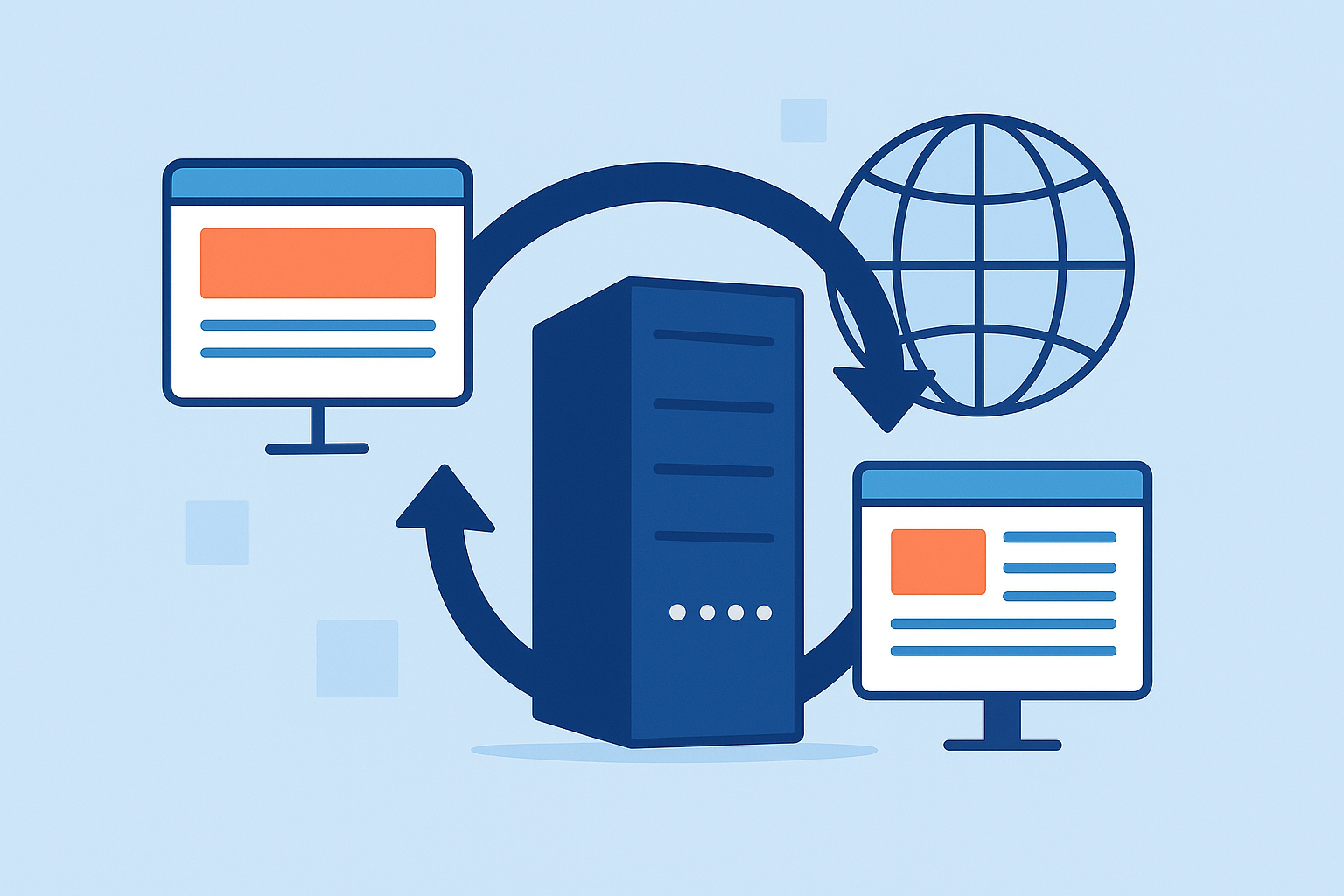
A Reverse Proxy Server is an intermediary that sits between clients (users) and backend servers. Unlike a forward proxy — which hides the client’s identity — a reverse proxy hides and protects the servers behind it. In simple terms, when you visit a website, your request may go through a reverse proxy that forwards your request to one of several backend servers and returns the response to you.
Example: When you access www.example.com, your connection may be handled by a reverse proxy that distributes requests across multiple servers to ensure fast loading and reliability.
How Does a Reverse Proxy Server Work?
The Reverse Proxy Server acts like a gateway. It receives requests from clients on behalf of one or more servers, processes those requests, and sends back the appropriate response. It is commonly used by businesses to improve load balancing, caching, and security.
Step-by-Step Workflow:
- The client (user) sends a request to the website’s domain.
- The DNS resolves the domain to the IP of the reverse proxy.
- The reverse proxy receives the request and forwards it to an appropriate backend server.
- The backend server processes the request and sends data back to the proxy.
- The reverse proxy sends the final response to the client.
Reverse Proxy vs Forward Proxy
To understand the value of a Reverse Proxy Server, it’s important to compare it with a Forward Proxy Server:
| Feature | Forward Proxy | Reverse Proxy |
|---|---|---|
| Protects | Client identity | Server identity |
| Used By | End users, organizations | Websites, data centers |
| Common Purpose | Privacy and access control | Load balancing, caching, and security |
| Typical Setup | On user or network side | On server or cloud side |
Benefits of Using a Reverse Proxy Server
- Load Balancing: Distributes traffic evenly across multiple servers to ensure uptime and performance.
- Enhanced Security: Protects backend servers from DDoS attacks, unauthorized access, and exposure.
- SSL Termination: Handles encryption/decryption to reduce load on backend servers.
- Content Caching: Stores frequently accessed content to reduce latency.
- Global Scalability: Enables geographically distributed content delivery.
Disadvantages of Reverse Proxy Servers
- Complex Configuration: Requires technical expertise to set up and manage.
- Single Point of Failure: If not properly configured, the proxy can become a bottleneck.
- Possible Latency: Improper caching or routing may slow performance.
Why Reverse Proxy Servers Matter in 2025
In 2025, websites and applications handle massive traffic and demand real-time protection. Reverse Proxy Servers are at the core of modern infrastructure for speed, reliability, and cybersecurity. With increasing cyberattacks, load balancing challenges, and global data delivery needs, businesses can’t afford to run without them.
They also integrate with other technologies such as VPS hosting, AI tools for traffic analysis, and Bitcoin-based proxy providers for privacy-conscious setups.
Popular Reverse Proxy Servers in 2025
- Nginx: Open-source, lightweight, and widely used for load balancing and caching.
- HAProxy: Known for advanced performance tuning and high-availability setups.
- Cloudflare: Offers global reverse proxy with DDoS protection and CDN features.
- Traefik: Designed for modern DevOps environments and microservices.
Best Practices for Setting Up a Reverse Proxy Server
- Use a dedicated VPS server to ensure speed and control.
- Enable SSL/TLS for encrypted communication.
- Integrate AI monitoring tools to detect performance issues automatically.
- Rotate or anonymize IPs using Bitcoin proxy services for privacy.
- Keep software regularly updated to prevent vulnerabilities.
Real-World Use Cases of Reverse Proxy Servers
- Content Delivery Networks (CDNs): Services like Cloudflare and Akamai use reverse proxies for global performance optimization.
- Corporate Firewalls: Reverse proxies filter inbound requests to prevent data breaches.
- Load Balancing for E-commerce: Platforms like Shopify or Amazon Web Services use them to handle heavy user traffic.
- Application Gateways: API gateways use reverse proxies for request routing and authentication.
FAQ – Reverse Proxy Server Explained
1. Is a Reverse Proxy Server the same as a VPN?
No. A VPN hides your client’s IP for privacy, while a Reverse Proxy hides and protects backend servers.
2. Can I host a Reverse Proxy on a VPS?
Yes. Many developers use VPS servers to deploy reverse proxies with full control and scalability.
3. What’s the best Reverse Proxy Server for small businesses?
Nginx and Cloudflare are top choices for their simplicity and cost-effectiveness.
4. Is using a Reverse Proxy Server legal?
Yes, it’s completely legal and widely used for improving performance, security, and scalability.
5. Should I use AI tools with a Reverse Proxy Server?
AI tools can monitor server load, detect suspicious activity, and optimize routing in real time — making your proxy setup more efficient.