
How To Choose The Best VPS Hosting Providers in 2025
Focus Keyword: Best VPS Hosting Providers
Updated for 2025 — This guide explains how to select among the best VPS hosting providers by comparing features, pricing, performance, and support so you pick the right host for your website or application.
Why Choosing the Best VPS Hosting Providers Matters
When you’re ready to step up from shared hosting or you’re launching a serious project (a website, an app, proxy service, AI tool backend, etc.), selecting among the best VPS hosting providers is crucial. The right choice can mean better performance, fewer outages, fewer security issues—and more head-space to focus on your business instead of server fires.
A poor choice can lead to slow load times, frequent downtime, limited scalability, unexpected costs, or poor customer support.
Core Criteria to Evaluate VPS Hosting Providers
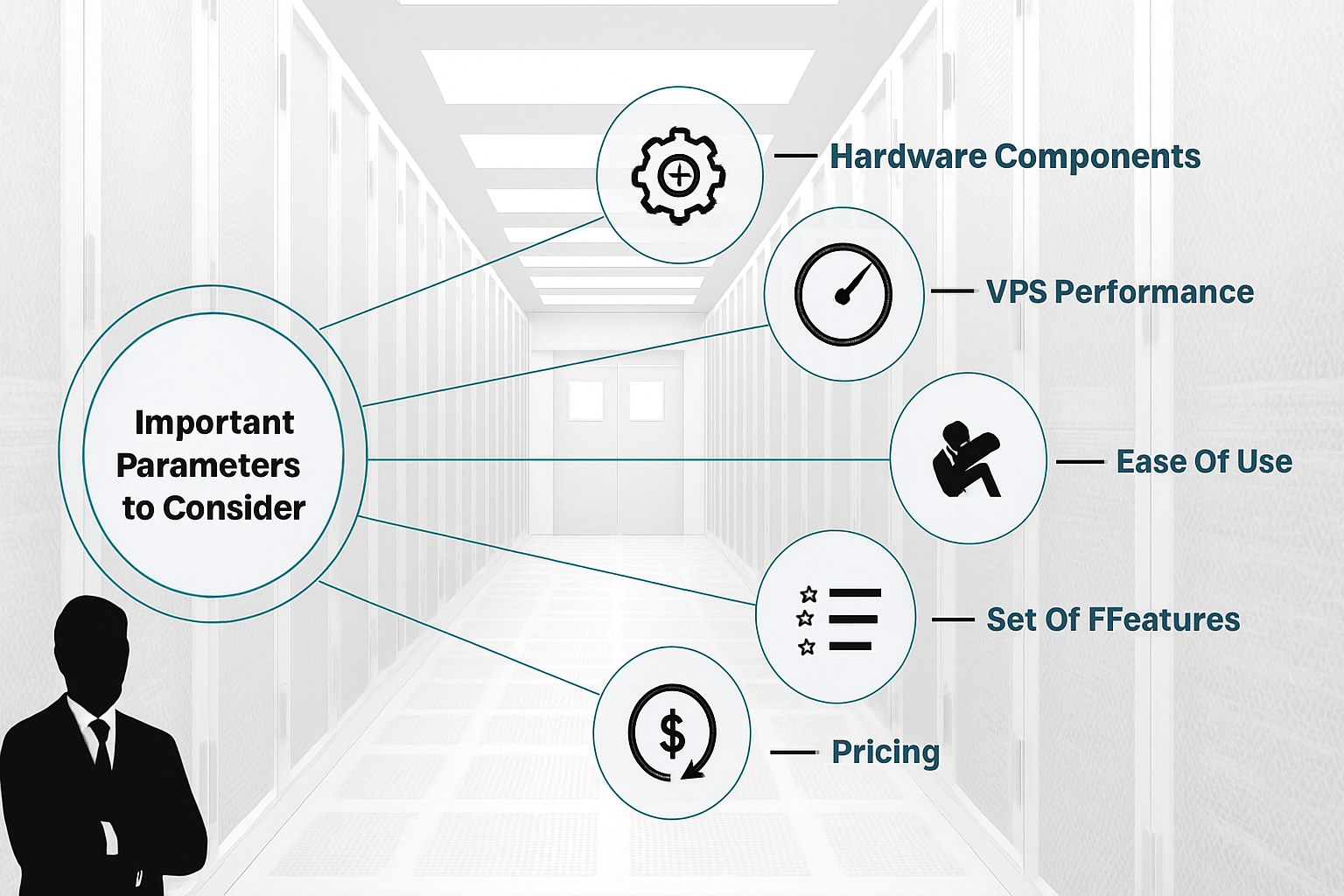
Here are the key factors you should check when comparing providers to identify the best VPS hosting providers:
- Performance & Hardware Specs: CPU type, number of vCPUs, RAM size, SSD/NVMe storage, network bandwidth and latency.
- Reliability & Uptime Guarantees: Look for 99.9%+ uptime, redundant infrastructure, solid track record.
- Scalability: Ability to upgrade resources easily (CPU, RAM, storage) without downtime or massive cost jumps.
- Data Center Locations: Global footprint allows you to choose a location near your users for lower latency.
- Support & Managed Options: 24/7 support, live chat, phone support, managed vs unmanaged plans.
- Control & Access: Root access / full administrative control vs limited managed environment.
- Security Features: DDoS protection, firewall, backups, snapshots, OS updates, secure virtualization.
- Pricing Transparency: Check base price, renewal price, add-ons (control panel licenses, backups, support), payment options (including crypto or Bitcoin if you prefer privacy).
- Payment Flexibility & Privacy: Some hosts accept Bitcoin or other crypto, increasing payment anonymity for privacy-sensitive workloads.
- Special Use Considerations: If you’re running proxies, AI tools, high-traffic websites, or automation tools — you might need different specs or features than a “just website” plan.
Comparing the Best VPS Hosting Providers: Feature Table
| Provider Feature | What to Look For | Why It Matters |
|---|---|---|
| vCPU & RAM | 1–2 vCPU & 2–4 GB RAM minimum (for basic sites), higher for apps | Determines how many users/requests your server can handle comfortably. |
| Storage Type | NVMe or SSD over HDD | Faster storage means faster read/write – important for database or apps. |
| Network Bandwidth & Location | Prefer ≥1 Gbps, global data-centers | Reducing latency improves user experience and SEO; location near users is key. |
| Uptime SLA & Backups | ≥99.9% uptime, daily backups, snapshot capability | Minimizes downtime risk and eases recovery from issues. |
| Managed/Unmanaged Option | Full managed support vs root access only | If you’re non-technical or running mission-critical apps, managed saves time and risk. |
| Payment Options | Credit card, PayPal, crypto (Bitcoin) support | Flexibility is good; crypto payments help privacy-focused users. |
Special Use Cases: What the Best VPS Hosting Providers Offer
If you’re using your VPS for more than a standard website—such as proxies, AI tools, automation, or cryptocurrency-related workloads—you’ll want to check if the hosting provider supports those use cases:
- Proxy / VPN Hosting: Some providers allow you to set up private proxies or VPN endpoints; check for network egress limits, policy regarding proxy usage, and IP reputation. For example, you might turn a VPS into a proxy server to support tools or marketing automation.
- AI / Machine Learning Workloads: If you’re running AI models, you’ll want GPU-support, high-memory instances, and fast storage. Some top providers are adding AI-optimized VPS tiers. :contentReference[oaicite:0]{index=0}
- Bitcoin or Crypto Payment Support: If privacy is key, look for VPS providers that accept Bitcoin or crypto payments for anonymous sign-up. Some budget VPS reviews highlight this trend. :contentReference[oaicite:1]{index=1}
How To Choose Among Providers: Step-by-Step
- Define Your Needs: Estimate traffic, type of application (website vs app vs backend), required uptime, and future growth.
- Shortlist 3–5 Providers: Pick based on your budget, region, and desired features (from above criteria).
- Check Performance Tests & Reviews: Sites like VPSBenchmarks test VPS hosts on raw performance and value. :contentReference[oaicite:2]{index=2}
- Test the Network Latency: Choose a data center near your users for lower ping and faster load times.
- Compare Real-World Costs: Base price vs renewal, hidden fees (control panel licenses, backups, support). Some large hosts have raised prices unexpectedly. :contentReference[oaicite:3]{index=3}
- Use a Trial or Money-Back Period: If available, test your setup during the trial to see real performance, stability and support responsiveness.
- Plan for Scalability: Choose a provider with easy upgrade paths (more CPU, RAM, storage) without migrating servers entirely.
- Support & Documentation: Especially if you’re not a sysadmin — good documentation, live chat, and phone support matter for uptime and problem resolution.
Common Mistakes to Avoid When Choosing VPS Hosting Providers
- Choosing purely on price: A very cheap VPS might have poor hardware, oversold resources, or slow network.
- Ignoring renewal pricing: Initial low price might double on renewal.
- Missing region location: Hosting far away from your users increases latency and can harm user experience or SEO.
- Not checking policy for your use case: Some hosts restrict proxies, crypto mining, or reselling—violations may lead to account suspension.
- Neglecting backups: Without proper backups you risk data loss; even best providers can suffer outages.
Frequently Asked Questions (FAQ)
Q1: What is the difference between a managed and unmanaged VPS?
A: Unmanaged VPS means you have full control but are responsible for setup, security, and maintenance. Managed VPS includes the provider handling server setup, updates, and backups—ideal for non-technical users.
Q2: How much should I pay for a quality VPS?
A: For decent performance in 2025 you might expect $5–$20/month for entry levels, and $30+ for more serious workloads. But remember it’s about value, not just dollars. Recent benchmarks show providers under $15/month with good specs. :contentReference[oaicite:4]{index=4}
Q3: Can I switch VPS providers later if needed?
A: Yes—most allow migration. Choose providers with good documentation and export options. Backups and server images make the transition smoother.
Q4: Does VPS hosting support proxies or AI tools?
A: Yes. Many of the best VPS hosting providers support custom setups, including proxy servers and AI model hosting. Just verify policy and resource specs.
Q5: Is it better to go for a cloud VPS or traditional VPS?
A: A “cloud VPS” often means scalable, pay-as-you-go usage on cloud infrastructure. If you need burst resources, global reach, or high reliability, cloud may be better. Traditional VPS (fixed resources) is fine for stable workloads.
Conclusion
Choosing among the best VPS hosting providers in 2025 means evaluating performance, reliability, scalability, price transparency, support, and suitability for your specific use case (website, app, proxy, AI backend, etc.). Take the time to shortlist, test, and compare. The right provider becomes a silent partner in your success—letting you focus on your project rather than server headaches.
Start your VPS journey today by matching your needs to the criteria above and picking the provider that truly meets your demands.