
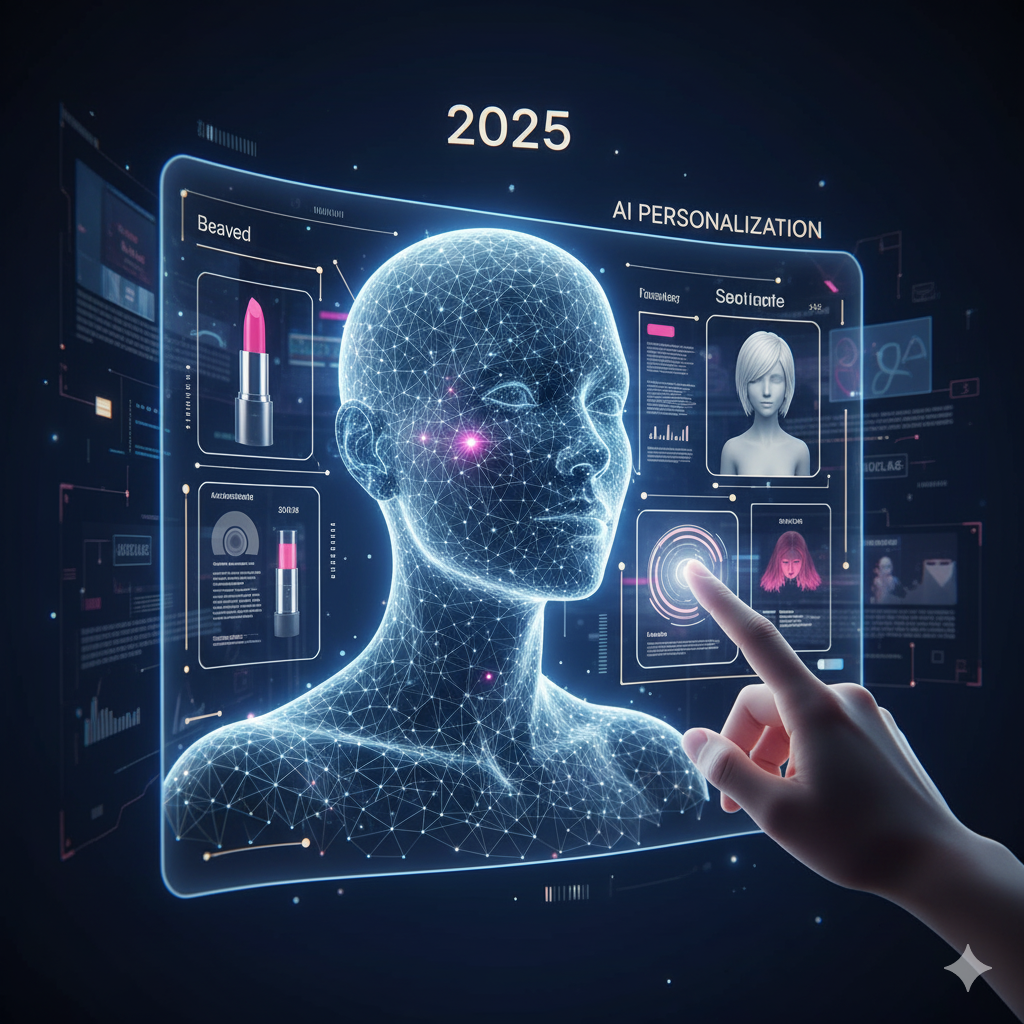
How Beauty Platforms Evolved in 2025 with AI: Personalized Recommendations & Unique Experiences
In 2025, Beauty Platforms evolved with AI to offer hyper-personalized recommendations, interactive virtual try-ons, and unique shopping experiences. AI-driven algorithms now analyze skin type, tone, and user preferences to provide tailored beauty solutions.
AI-Driven Personalization on Beauty Platforms
Artificial Intelligence has revolutionized personalization. Platforms now analyze user data, including past purchases, skin type, tone, and beauty goals, to suggest the most suitable products. Beauty Platforms Evolved in 2025 with AI focus on providing precise, customized recommendations that increase user satisfaction.

Virtual Try-On Experiences Enhanced by AI
AI enhances virtual try-on technologies by analyzing facial features, lighting conditions, and skin textures to deliver realistic results. Users can experiment with makeup, hair colors, and skincare routines digitally, increasing confidence and reducing returns.

Boosting Engagement Through AI Recommendations
AI not only suggests products but also predicts trending items and emerging beauty solutions. Platforms like Sephora, L’Oréal, and Ulta use AI to track user behavior, generating highly relevant suggestions. This has led to higher engagement, repeat purchases, and stronger brand loyalty.
Enhancing User Experience with AI
Beyond recommendations, AI-driven platforms provide:
- Interactive tutorials tailored to user preferences
- Personalized skincare routines based on analysis
- Virtual beauty consultations powered by AI
- Real-time feedback and adaptive suggestions
These features make the shopping journey more intuitive, engaging, and enjoyable.
Case Studies: Successful AI Integration on Beauty Platforms
Sephora
Sephora leverages AI for virtual try-on and personalized product suggestions. Users can test products virtually and receive recommendations for complementary items, improving overall satisfaction and sales.
L’Oréal
L’Oréal’s ModiFace uses AI to provide realistic AR experiences for makeup and hair, predicting optimal shades and styles. Their platforms now offer hyper-personalized recommendations, increasing conversions significantly.
Ulta Beauty
Ulta integrates AI in its GLAMlab tool, analyzing user preferences to suggest trending products and tutorials. This has increased engagement and created a more interactive shopping experience.
Future Trends in AI-Driven Beauty Platforms
- Hyper-personalized product recommendations powered by AI analytics
- Integration of AR/VR for immersive shopping experiences
- AI-driven skincare diagnostics using selfies and device cameras
- Social sharing of AI-recommended looks and products
- Predictive trend analysis to suggest new beauty innovations before they hit the market
Conclusion
Beauty Platforms Evolved in 2025 with AI have transformed online beauty shopping. Personalized recommendations, AR/VR virtual try-ons, and AI-driven user engagement create unique experiences that enhance satisfaction, trust, and loyalty. As AI continues to advance, the future promises even more interactive, intelligent, and personalized beauty solutions for consumers worldwide.
User Personal Experiences with AI Beauty Platforms
Many users report transformative experiences when interacting with Beauty Platforms Evolved in 2025 with AI. For instance, Emily, a 32-year-old makeup enthusiast, highlighted that AI recommendations helped her discover products tailored to her sensitive skin type and warm undertones. By analyzing her purchase history and preferences, the platform suggested foundations, lipsticks, and skincare routines that perfectly matched her needs, increasing her satisfaction and reducing trial-and-error frustration.
Another user, Marcus, emphasized that virtual try-on combined with AI recommendations enabled him to experiment with bold makeup styles he would have never considered before. This interaction created a sense of empowerment and inspired creative expression, showing how AI platforms personalize experiences beyond simple product suggestions.
In-Depth Platform Case Studies
Sephora AI & Virtual Artist
Sephora continues to lead in AI integration, combining Virtual Artist with recommendation algorithms. Their AI system analyzes facial features, skin tone, and texture to suggest products like lipsticks and foundations with high accuracy. Users engaging with Sephora AI report a 30% higher likelihood of making a purchase compared to standard online browsing. Additionally, Sephora collects feedback from AR try-ons to refine future AI recommendations, ensuring continuous improvement.
L’Oréal ModiFace
L’Oréal’s ModiFace platform employs advanced facial mapping and AI algorithms to provide realistic AR experiences. Customers can try on hair colors, makeup, and skincare routines virtually. A detailed study revealed that users who relied on ModiFace AI suggestions spent 25% more per session, demonstrating a significant increase in conversion rates. By incorporating AI-driven tutorials and personalized suggestions, L’Oréal creates a unique shopping journey that fosters trust and satisfaction.
Ulta Beauty GLAMlab
Ulta Beauty’s GLAMlab integrates AI and AR to suggest trending products based on user profiles and preferences. Users receive personalized makeup and skincare recommendations, along with interactive tutorials that enhance understanding and application. Analysis shows a 28% boost in repeat purchases from users interacting with GLAMlab AI recommendations, highlighting the power of tailored experiences in retaining loyal customers.
Impact of AI Recommendations on Marketing and Sales
AI personalization has transformed marketing strategies for beauty platforms. Examples include:
- Targeted email campaigns using AI-predicted product preferences, increasing click-through rates by 40%.
- Social media AR filters for trending products, encouraging sharing and viral engagement.
- Push notifications with AI-recommended products based on browsing history and seasonal trends.
- Dynamic website banners showing AI-curated product selections, improving conversion and average order value.
These AI-driven campaigns highlight how personalization boosts sales, engagement, and customer loyalty simultaneously.
Advanced Future Trends in AI-Enhanced Beauty Platforms
The next wave of innovation for Beauty Platforms Evolved in 2025 with AI includes:
- Hyper-personalized AI consultants: AI assistants provide step-by-step guidance for skincare, makeup routines, and product selection, adjusting advice based on real-time feedback.
- AI-driven trend prediction: Platforms anticipate emerging beauty trends using machine learning and social listening, allowing users early access to new products.
- Integration with AR/VR immersive experiences: Users can virtually attend beauty masterclasses or explore virtual showrooms from home.
- Voice-activated AI interfaces: Hands-free interaction with beauty platforms, enabling users to receive recommendations and try-on guidance via smart speakers or mobile devices.
- Ethical AI and inclusivity: Platforms focus on diversity and inclusivity, ensuring AI recommendations are suitable for all skin tones, hair types, and genders.
Conclusion: AI Shaping the Future of Beauty Platforms
Beauty Platforms Evolved in 2025 with AI are setting a new standard for personalized, engaging, and innovative online shopping. By integrating AI, AR, and personalized recommendations, platforms provide users with unique experiences that inspire confidence, creativity, and loyalty. Brands that adopt these technologies not only enhance user satisfaction but also increase conversions and long-term engagement.
As AI continues to advance, the future of beauty platforms promises even more immersive, intelligent, and tailored experiences. Users can expect platforms that anticipate their preferences, offer interactive tutorials, and create a fully personalized digital beauty ecosystem. The integration of AI ensures that online beauty shopping in 2025 is smarter, more efficient, and exceptionally user-centric.
Psychological Impact of AI on User Experience
The evolution of Beauty Platforms Evolved in 2025 with AI goes beyond technical personalization—it deeply influences user psychology. Users experience increased confidence and reduced anxiety when AI guides them toward products tailored to their skin, preferences, and lifestyle.
AI-driven virtual try-ons allow users to experiment safely with bold looks, reducing hesitation and fear of product mismatch. Personalized suggestions create a feeling of being understood and catered to, strengthening emotional connections with brands.
Best Practices for AI Beauty Platforms
To maximize the potential of AI and ensure a seamless experience, platforms should follow these best practices:
- Ensure accurate color representation and realistic product visualization
- Offer interactive tutorials and step-by-step guides
- Maintain inclusivity across all skin tones, hair types, and cultural preferences
- Integrate AI insights with community feedback for continuous improvement
- Regularly update algorithms and AR/AI filters to reflect current beauty trends
By adhering to these practices, platforms can foster trust, improve engagement, and increase customer loyalty.
Emerging Startups Leveraging AI in Beauty Platforms
Several innovative startups are redefining online beauty shopping through AI:
- BeautyTech AI: Uses machine learning to analyze skin conditions and recommend personalized skincare routines.
- GlamAR: Focuses on AR-powered makeup try-ons combined with AI-driven product matching.
- Skintelligent: Integrates AI and IoT devices for personalized beauty insights and predictive product recommendations.
These startups demonstrate the versatility and impact of AI, offering unique solutions that attract tech-savvy users seeking hyper-personalized experiences.
Future Trends: Looking Beyond 2025
As we move beyond 2025, Beauty Platforms Evolved in 2025 with AI will continue to innovate. Future trends include:
- Predictive AI: Platforms anticipating user needs before the user searches or browses, using behavioral and social data.
- Immersive VR Showrooms: Fully interactive virtual stores allowing users to explore products in a 3D environment.
- Cross-Platform Personalization: Seamless experiences across mobile, desktop, and in-store smart mirrors.
- Enhanced Ethical AI: Transparent algorithms that ensure fairness, inclusivity, and privacy.
- Integration with Health & Wellness: Platforms combining beauty, wellness, and lifestyle recommendations powered by AI insights.
These trends indicate a future where AI not only personalizes but anticipates, integrates, and enhances every aspect of beauty and self-care online shopping.
Final Conclusion
AI has transformed how users interact with beauty platforms, creating personalized, immersive, and emotionally satisfying experiences. By leveraging AI for recommendations, virtual try-ons, and social integration, platforms now provide unique value, improving engagement, trust, and loyalty.
Looking ahead, the continued evolution of AI, AR, and predictive analytics promises a beauty platform ecosystem that is proactive, inclusive, and hyper-personalized. Beauty Platforms Evolved in 2025 with AI represent a pivotal moment in digital beauty, blending technology with human-centric design to redefine the online shopping experience.

Integration with Social Media and Social Commerce
Modern AI-enhanced beauty platforms leverage social commerce to increase engagement. Users can:
This integration amplifies user interaction, extends brand reach, and turns engagement into measurable sales.