
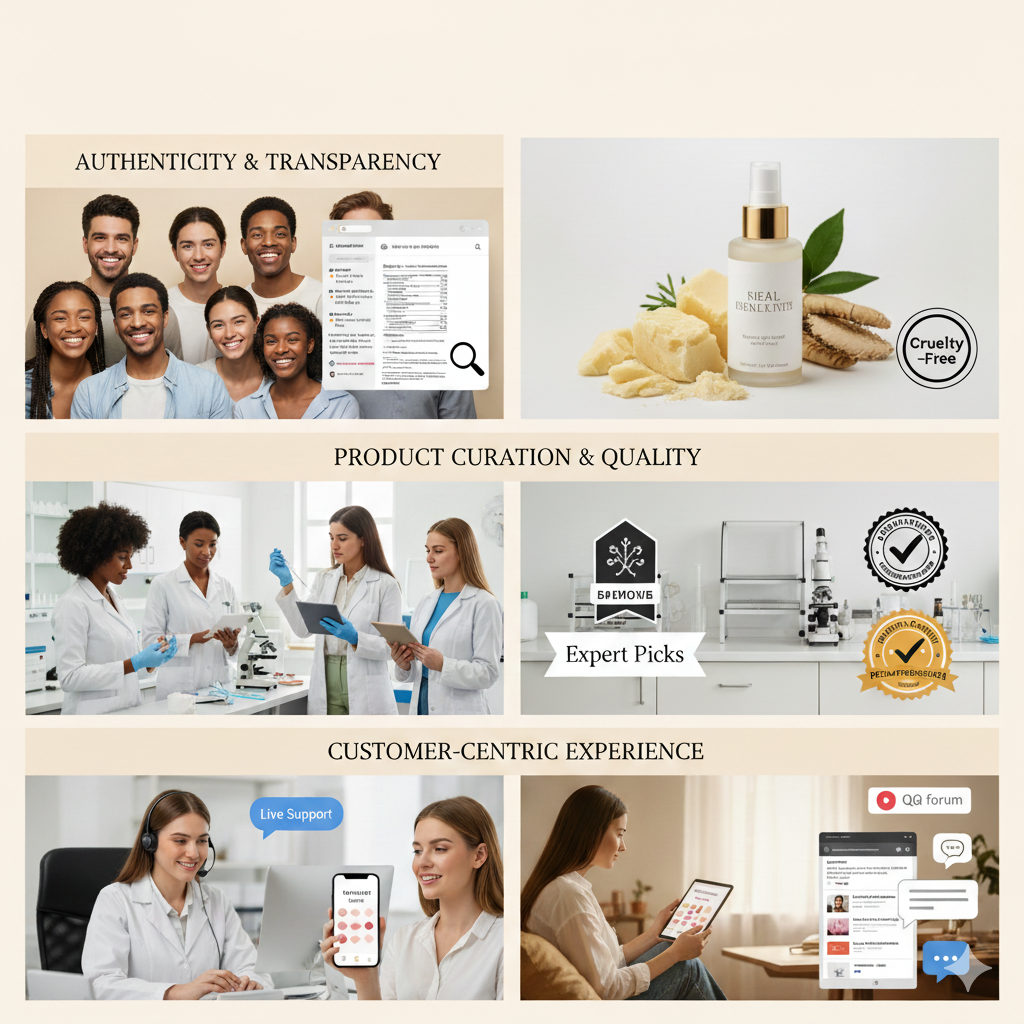
Discover the Secrets of the Most Trusted Beauty Platforms
In 2025, beauty has gone digital — but not all platforms are built on trust. Let’s uncover what makes certain beauty apps and sites rise above the rest, combining transparency, science, and user experience.
1. What Makes a Beauty Platform Truly Trusted?
In the era of digital beauty, trust has become the most valuable currency. The most trusted beauty platforms don’t just sell products — they empower users through education, transparency, and authenticity. Instead of flashy marketing, they rely on dermatological data, verified customer reviews, and ingredient traceability to build credibility.
Platforms such as Sephora and Ulta Beauty lead the way by integrating science-backed ratings, AI skincare diagnostics, and ingredient comparison tools that allow customers to make informed decisions.

2. How Technology Enhances Trust and Transparency
The rise of AI-driven beauty technology has transformed how users interact with products. Platforms now use artificial intelligence to scan ingredients, predict skin reactions, and personalize recommendations. This shift has replaced subjective opinions with data-driven insights, improving user satisfaction and loyalty.
For example, apps like PerfectCorp and YouCam integrate AI facial mapping and augmented reality (AR) to offer virtual try-ons and skincare analysis. This technology helps users trust their purchase decisions even before they commit to buying a product.
3. Real User Reviews: The Foundation of Credibility
One of the main reasons users trust certain platforms is the authenticity of their reviews. Trusted platforms invest heavily in review verification, ensuring that every comment and star rating comes from a verified buyer. This prevents manipulation and provides a realistic view of product performance.
Research from Statista shows that 86% of online beauty shoppers in 2025 check user feedback before making a purchase. Transparency in reviews has become more influential than celebrity endorsements.
4. Clean Beauty and Sustainability: Earning Consumer Trust
Modern beauty enthusiasts are not just looking for glowing skin — they’re seeking ethical brands that care about the planet. The most trusted beauty platforms now highlight clean, cruelty-free, and eco-conscious products. These values resonate deeply with Gen Z and Millennials, who prioritize sustainability as much as product performance.
Platforms like The Detox Market and Credo Beauty have become pioneers in ethical e-commerce, offering strict ingredient standards and transparent sourcing policies. This ethical shift has redefined trust in the beauty industry.
5. The Role of Personalization in Building Long-Term Loyalty
Personalization is a defining factor for trust in 2025. Trusted beauty platforms collect skin type data, preferences, and historical purchases to deliver hyper-personalized recommendations. The goal is not just to sell products but to guide users toward routines that fit their individual needs.
For instance, many top-rated apps now feature “smart skincare coaches” — AI-driven assistants that track user progress, monitor environmental factors, and adjust recommendations accordingly. This human-like personalization makes users feel understood and valued.
6. Privacy and Data Protection: A Hidden Secret of Trust
In an age where data is power, protecting user information is critical. Trusted beauty platforms go beyond product excellence; they safeguard customer identities and preferences. Compliance with GDPR, transparent privacy policies, and secure payment systems are non-negotiable trust indicators.
When users know their personal data is safe, they’re more likely to share sensitive information like skin conditions or allergies — allowing the platform to offer even better personalization.
7. Community and Authentic Engagement
Beauty is more than products — it’s about connection. Trusted platforms create strong communities through discussion forums, live Q&A sessions with experts, and real-time feedback loops. Users feel empowered to share their skincare journeys, and this sense of belonging enhances platform credibility.
For instance, Glossier turned its loyal fanbase into a co-creation community, where users help test products and suggest improvements before launch. This collaborative model fosters emotional investment and brand trust.
8. Expert Voices: What Professionals Say
“Trust is no longer about glossy ads. It’s about evidence — users want to see lab results, dermatologist backing, and transparent pricing.” — Dr. Sofia Chen, Cosmetic Dermatologist
“AI and transparency have changed the way people buy skincare. The more a brand reveals about its process, the more consumers engage.” — Aaron Mills, Digital Beauty Analyst
Conclusion: Transparency Is the New Luxury
The beauty landscape of 2025 is built on one foundation: trust. Platforms that combine science, technology, and honesty are leading the industry. Consumers are no longer swayed by superficial marketing — they demand proof, clarity, and authenticity.
Discovering the secrets of the most trusted beauty platforms means uncovering a movement that values people over profits. Whether you’re a brand or a customer, transparency is the true definition of beauty today.
The Deeper Psychology Behind Celebrity Influence
Humans have always been influenced by the people they admire. In the beauty industry, this tendency has evolved into a powerful marketing tool that shapes consumer decisions across all demographics. Psychologists call this phenomenon “aspirational identification” — the natural desire to emulate the perceived success and confidence of public figures. Celebrity-endorsed beauty platforms capitalize on this emotional connection by transforming admiration into engagement.
In 2025, this influence has matured. Consumers no longer follow celebrities blindly; they analyze their authenticity, past collaborations, and commitment to ethical values. The platforms that succeed are those that merge emotional appeal with factual integrity. For example, many users report trusting brands like Fenty Beauty and Rare Beauty because their founders actively discuss product formulation, inclusivity, and real-world results, rather than relying on shallow advertisements.
From Endorsement to Innovation: How Celebrities Redefined Beauty Platforms
The shift from passive endorsement to active innovation has revolutionized the relationship between celebrities and their audiences. Instead of being the face of a brand, celebrities are now the architects of it. They participate in product testing, invest in research labs, and collaborate with dermatologists and chemists to ensure efficacy. This has made modern beauty platforms more science-driven and transparent than ever before.
Data from McKinsey suggests that celebrity-led platforms that prioritize R&D over marketing experience a 35% higher retention rate than those relying solely on influencer appeal. In essence, innovation has become the new form of authenticity.
Consumer Behavior: Why Authenticity Outperforms Advertising
Beauty consumers today are savvy. They cross-reference reviews, follow dermatologists on social media, and demand ingredient transparency. For this generation, authenticity is the new luxury. When celebrities share unfiltered routines or speak openly about skin struggles, they humanize the brand — creating a deep sense of relatability.
Platforms endorsed by celebrities such as The Honest Company or Kylie Cosmetics thrive not because of fame alone, but because of the perceived honesty behind their storytelling. The best celebrity-endorsed platforms invite users to be part of a shared journey rather than a one-sided sale.
Furthermore, social media engagement plays a key role. Consumers feel validated when a celebrity interacts with their comments or acknowledges their reviews. This two-way communication transforms passive customers into loyal brand ambassadors.
AI Technology and the Next Phase of Celebrity Beauty Platforms
Artificial Intelligence has brought measurable trust to the subjective world of beauty. Modern celebrity platforms now use machine learning to analyze consumer feedback, detect ingredient sensitivities, and offer personalized product suggestions. This technology allows brands to scale authenticity — ensuring every customer feels personally understood, even in a global marketplace.
For instance, AI-driven recommendation engines help identify skincare products that match individual profiles, reducing trial-and-error frustrations. Combined with celebrity credibility, this blend of technology and trust has reshaped how consumers experience beauty shopping.
As AI becomes more advanced, we’ll likely see virtual beauty consultants powered by celebrity voices and digital avatars. Imagine an AI skin coach voiced by your favorite star, giving personalized advice based on your real-time skin data — this is no longer science fiction, but the next frontier of digital beauty.
The Future Outlook: Celebrity Platforms in the Age of Conscious Consumerism
Looking ahead, celebrity-endorsed beauty platforms will likely evolve into full-fledged ecosystems combining e-commerce, community learning, and sustainability tracking. Experts predict that platforms with transparent carbon footprints and circular packaging systems will dominate the next decade of beauty innovation.
Additionally, blockchain verification is emerging as a tool for transparency. Some forward-thinking celebrity brands are already experimenting with blockchain technology to verify ingredient sourcing and authenticate products — eliminating counterfeit risks and increasing trust.
As the industry matures, users will favor platforms that are not only beautiful but also responsible, data-driven, and emotionally resonant. The next generation of consumers will not ask, “Which celebrity supports this brand?” but “Does this brand support its users and the planet?”
Final Thoughts: When Fame Meets Authenticity
At their best, celebrity-endorsed beauty platforms bridge the gap between aspiration and reality. They bring together artistry, technology, and integrity in a way that feels personal and inspiring. The secret to their success is simple yet profound: they listen. They evolve. They connect.
As we continue through 2025, users have more power than ever to shape which platforms succeed. Real user experiences, honest feedback, and ethical expectations now define the beauty world. Fame opens the door, but authenticity keeps it open.

The Social Responsibility of Celebrity-Endorsed Platforms
With great influence comes great responsibility. In 2025, celebrities are increasingly aware that their beauty platforms can shape cultural values around self-image, confidence, and inclusivity. Many are taking this responsibility seriously by promoting mental health awareness, body positivity, and ethical sourcing.
Take the example of Selena Gomez’s Rare Beauty Foundation, which allocates a portion of profits to mental health initiatives, or Rihanna’s Fenty Skin, known for representing all skin tones equally. These actions build trust that goes far beyond beauty — they create emotional equity, where consumers support the brand because it reflects their values.
Such platforms illustrate a key truth: trust is earned through purpose, not perfection. Consumers increasingly expect beauty platforms to have a moral compass and measurable social impact.