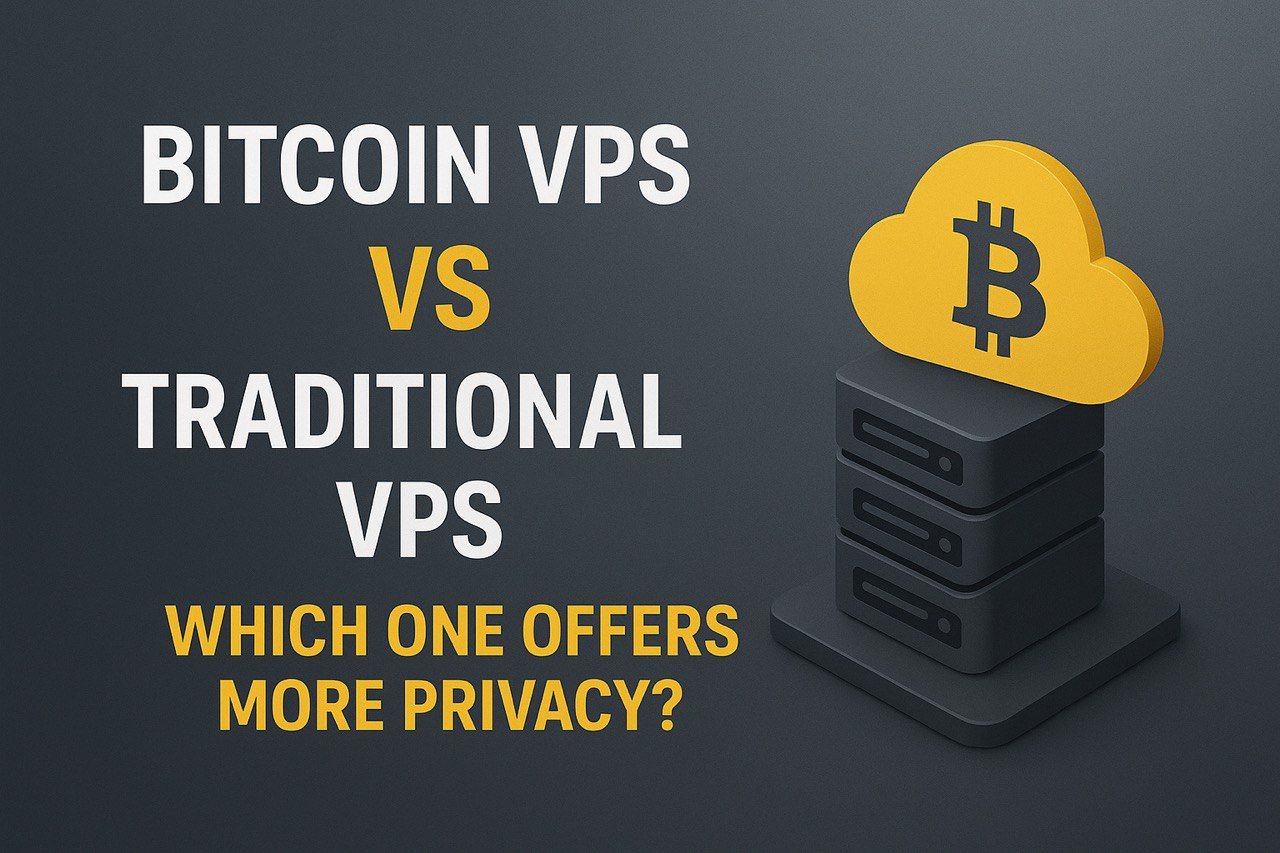
Bitcoin VPS vs Traditional VPS: Which One Offers More Privacy?
Privacy is becoming a top concern for individuals and businesses when choosing VPS hosting in 2025. With the rise of cryptocurrency payments, Bitcoin VPS hosting has emerged as a strong alternative to traditional VPS services. But how do these two types of VPS compare in terms of privacy and security?
In this article, we will compare Bitcoin VPS and Traditional VPS, evaluate their privacy benefits, and guide you in choosing the right hosting solution for your needs.
1. Understanding Bitcoin VPS and Traditional VPS
Bitcoin VPS
A Bitcoin VPS is a virtual private server that accepts cryptocurrency payments, particularly Bitcoin, and often provides options for anonymous or no-KYC sign-ups. This type of VPS is designed for users who value privacy and want to pay without sharing personal financial details.
Traditional VPS
A traditional VPS is a virtual server purchased with conventional payment methods such as credit cards, PayPal, or bank transfers. These providers typically require personal information and, in many cases, full KYC verification.
2. Key Privacy Differences
- Payment Privacy: Bitcoin VPS allows payments with cryptocurrencies, keeping your identity private. Traditional VPS often exposes your personal information through bank or card payments.
- Account Creation: Many Bitcoin VPS providers require minimal information, while traditional VPS usually asks for full identity verification.
- Transaction Anonymity: Bitcoin transactions can be pseudonymous. Traditional payment methods leave a direct financial trail.
- Server Logs: Privacy-focused Bitcoin VPS providers may have stricter policies regarding logs and monitoring.
- Jurisdiction: Bitcoin VPS often hosts servers in privacy-friendly locations; traditional VPS may operate under stricter regulatory environments.
3. Comparison Table: Bitcoin VPS vs Traditional VPS
| Feature | Bitcoin VPS | Traditional VPS |
|---|---|---|
| Payment Method | Bitcoin, other cryptocurrencies | Credit card, PayPal, bank transfer |
| KYC Requirement | No or minimal | Yes, usually mandatory |
| Account Privacy | High | Low to medium |
| Server Locations | Privacy-friendly jurisdictions | Regulated countries |
| Transaction Traceability | Pseudonymous | Directly linked to personal information |
| Best Use Case | Privacy-focused users, crypto projects | General hosting for businesses and websites |
| Support & Compliance | May be limited to email or ticket | Comprehensive support and regulatory compliance |
4. Security Benefits of Bitcoin VPS
- Pay anonymously using Bitcoin or other cryptocurrencies.
- Option for no-KYC signup increases user privacy.
- Hosts often provide enhanced privacy features, like limited logging and DDoS protection.
- Multiple global data centers in privacy-friendly jurisdictions.
- Strong encryption and access controls by default.
5. Security Considerations for Traditional VPS
- Payment and account details are traceable to the individual or business.
- Regulatory compliance may require logging user activity.
- Support and infrastructure are robust, but privacy is limited.
- Often better uptime guarantees and enterprise-grade support.
- Best for users who value compliance over anonymity.
6. How to Maximize Privacy with Bitcoin VPS
- Use a secure, non-custodial crypto wallet for payment.
- Consider privacy coins like Monero for additional anonymity.
- Sign up using a secure email provider and VPN.
- Enable two-factor authentication and strong passwords.
- Regularly update and patch your VPS for security.
- Consider using encrypted backups and secure file transfer methods.
7. Common Use Cases for Each VPS Type
Bitcoin VPS Use Cases
- Anonymous web hosting
- Crypto projects and trading bots
- Private VPN or proxy servers
- Secure file storage or backup solutions
- Privacy-focused applications and websites
Traditional VPS Use Cases
- Corporate websites and applications
- eCommerce platforms
- Enterprise-grade hosting with full compliance
- Development and staging environments
- Managed hosting with professional support
8. FAQs
Q1: Is Bitcoin VPS completely anonymous?
It can be pseudonymous depending on how you pay and sign up. Using VPN, secure wallets, and minimal information improves privacy.
Q2: Are Bitcoin VPS servers secure?
Yes. Most privacy-focused VPS providers offer strong encryption, firewalls, and DDoS protection.
Q3: Can traditional VPS provide privacy?
Limited privacy is possible with VPNs and encrypted apps, but payment and account info are typically traceable.
Q4: Which is better for privacy-conscious users?
Bitcoin VPS is generally better for privacy, especially if avoiding KYC is important.
9. Conclusion
When comparing Bitcoin VPS vs Traditional VPS in 2025, the key differentiator is privacy. Bitcoin VPS allows for crypto payments, minimal personal information, and privacy-focused server setups. Traditional VPS offers strong infrastructure and support but generally requires personal information and KYC verification.
Privacy-conscious individuals and businesses will benefit most from Bitcoin VPS solutions, while traditional VPS is suitable for users who prioritize regulatory compliance and enterprise-grade support.