Autonomous Proxy Networks for the AI-Driven Web

Infrastructure that Thinks
Self-healing, self-optimizing, and invisible.
The web of 2026 is no longer designed solely for humans. It is an ecosystem teeming with AI agents, automated scrapers, and algorithmic traders. In this new reality, static infrastructure is a liability. The future belongs to Autonomous Proxy Networks for the AI-Driven Web.
Traditional proxy management involved manual rotation, constant monitoring, and reactive troubleshooting. Autonomous networks flip this script. They use reinforcement learning to adapt to defensive countermeasures in real-time. If a target site updates its WAF (Web Application Firewall), the network evolves its fingerprinting strategy instantly, without human intervention.
This guide explores the architecture of these sentient networks. We will delve into how they power the next generation of AI applications, from training Large Language Models (LLMs) on live data to executing complex, multi-step tasks across the decentralized web.
The Shift: From Manual to Autonomous
Why is autonomy necessary? The speed of the web has outpaced human reaction time. Anti-bot systems now update their rulesets every few minutes. A static proxy list purchased at 9:00 AM is often obsolete by 9:15 AM.
The OODA Loop of 2026
Observe: The network detects a 403 Forbidden error.
Orient: AI analyzes the response headers and TLS fingerprint.
Decide: The system selects a new IP subnet and alters the HTTP/3 frames.
Act: The request is retried successfully in under 200ms.
Self-Healing Infrastructure
Autonomous Proxy Networks are biological in their resilience. They treat IP addresses like cells—expendable and replaceable.
- ● Predictive Failure: The system monitors latency jitter. If a residential peer shows signs of instability, connections are drained and migrated to a healthy node before the connection drops.
- ● Pool Regeneration: As IP blocks are exhausted or flagged, the network automatically provisions new subnets from its global reserve, ensuring infinite scalability without downtime.
AI-Driven Routing: The Brain
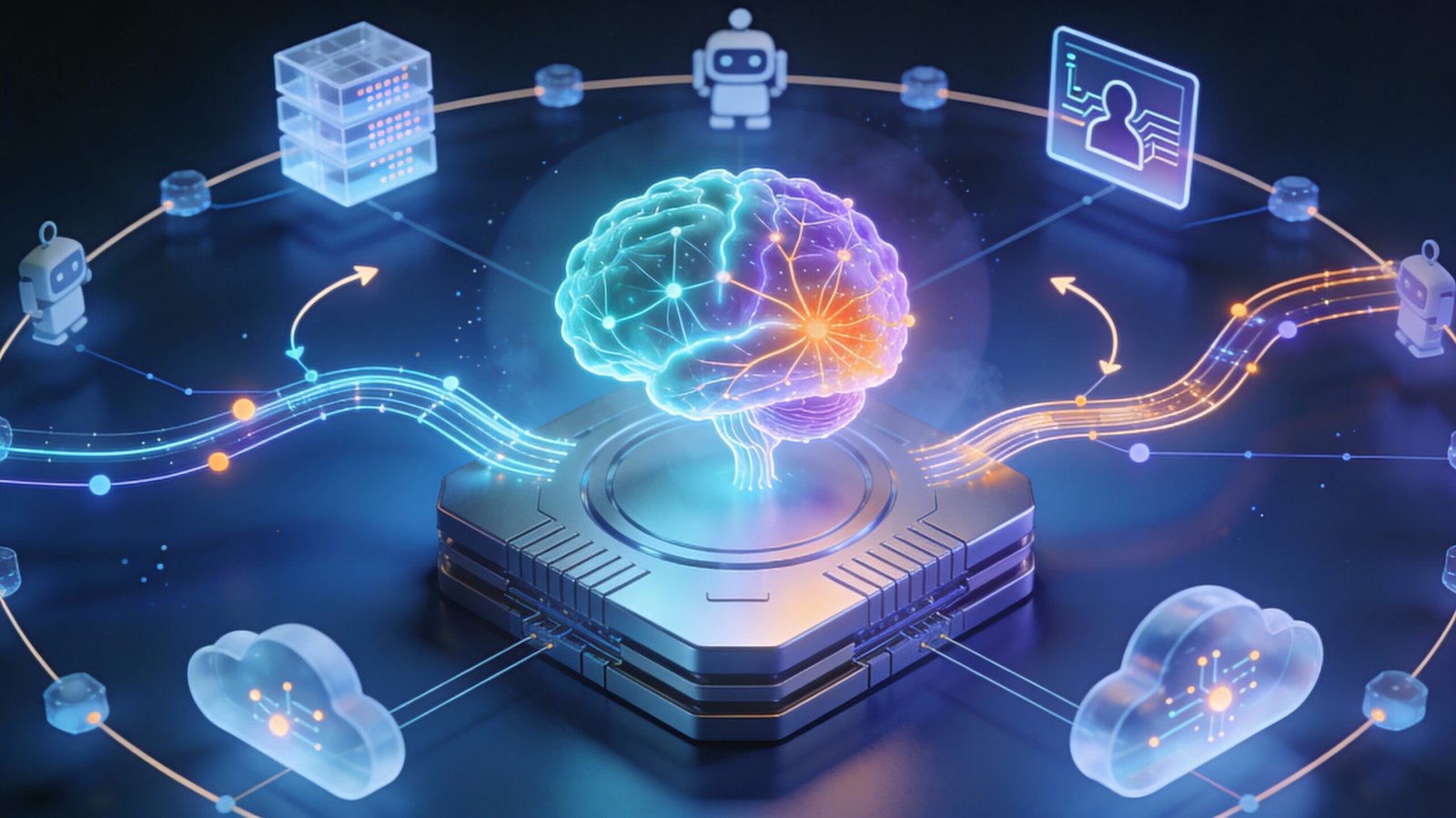
Routing is no longer about geography; it’s about success probability. Autonomous Proxy Networks for the AI-Driven Web utilize Deep Reinforcement Learning (DRL) agents to route traffic.

The AI learns which IPs work best for specific targets. It knows that “ISP A in London” has a 99% success rate on “Target X,” while “ISP B” is blocked. It routes your request accordingly, optimizing for cost and speed simultaneously. This “Context-Aware Routing” is the hallmark of modern infrastructure.
The Agentic Web: Proxies for AI Agents
We are entering the era of the “Agentic Web,” where AI agents perform tasks on behalf of users (booking flights, negotiating prices). These agents require Persistent Identities.
Session Continuity: unlike a scraper that needs a new IP every second, an AI Agent needs to hold a session for 30 minutes to complete a purchase flow. Autonomous networks provide “Sticky Sessions” that maintain the same residential IP and browser fingerprint for the duration of the task, ensuring the agent is not flagged as a bot mid-transaction.
Decentralized & Edge-Based Architecture
Centralized gateways create latency. Autonomous networks push logic to the Edge.
Edge Execution
TLS encryption and header rewriting happen at the Edge Point of Presence (PoP) closest to the target server, reducing round-trip time (RTT) by up to 40%.
Mesh Topology
Nodes communicate in a mesh. If a transatlantic cable is cut, traffic automatically flows through the Pacific route without a central controller needing to intervene.
Bot vs. Bot Security Warfare
The modern web is an adversarial environment. It is Bot (Scraper) vs. Bot (Defense). Autonomous Proxy Networks include offensive security capabilities.
CAPTCHA Solving: When a CAPTCHA is encountered, the network doesn’t fail. It automatically offloads the challenge to a specialized AI vision model that solves it in real-time, passing the clearance token back to your scraper transparently.
Honeypot Detection: The network identifies “Honeypots” (fake data traps set by website admins) and steers your scrapers away from them, protecting the integrity of your dataset.
Strategic Use Cases
1. LLM Training & Fine-Tuning
To train a model on “current events,” you need to scrape news sites in real-time. Autonomous networks allow for the ingestion of millions of articles per hour without triggering anti-scraping bans, ensuring your AI is always up-to-date.
2. Real-Time Market Adaptation
E-commerce algorithms use these networks to monitor competitor pricing every 10 seconds. If a competitor drops a price, the algorithm detects it via the proxy and adjusts your pricing instantly, winning the “Buy Box” automatically.
Future Outlook: 2027 and Beyond
The future lies in Synthentic Traffic Generation.
As websites become better at detecting bots, networks will begin generating “noise” traffic—simulating human behavior (mouse movements, random clicks) to mask the actual data collection activity. This “Chaff and Flare” tactic will become standard in Autonomous Proxy Networks for the AI-Driven Web.
Conclusion: The Infrastructure of Autonomy

The era of manual proxy management is over. As AI agents become the primary users of the internet, the infrastructure supporting them must evolve. Autonomous Proxy Networks for the AI-Driven Web represent the pinnacle of this evolution—a self-driving layer of the internet that ensures data flows freely, securely, and efficiently.
Investing in autonomous infrastructure is not just a technical upgrade; it is a strategic necessity for any organization looking to leverage the full power of Artificial Intelligence in the real world.
Ready to Automate Your Reach?
Join the beta for our next-gen autonomous grid. Zero configuration. Infinite scale.