
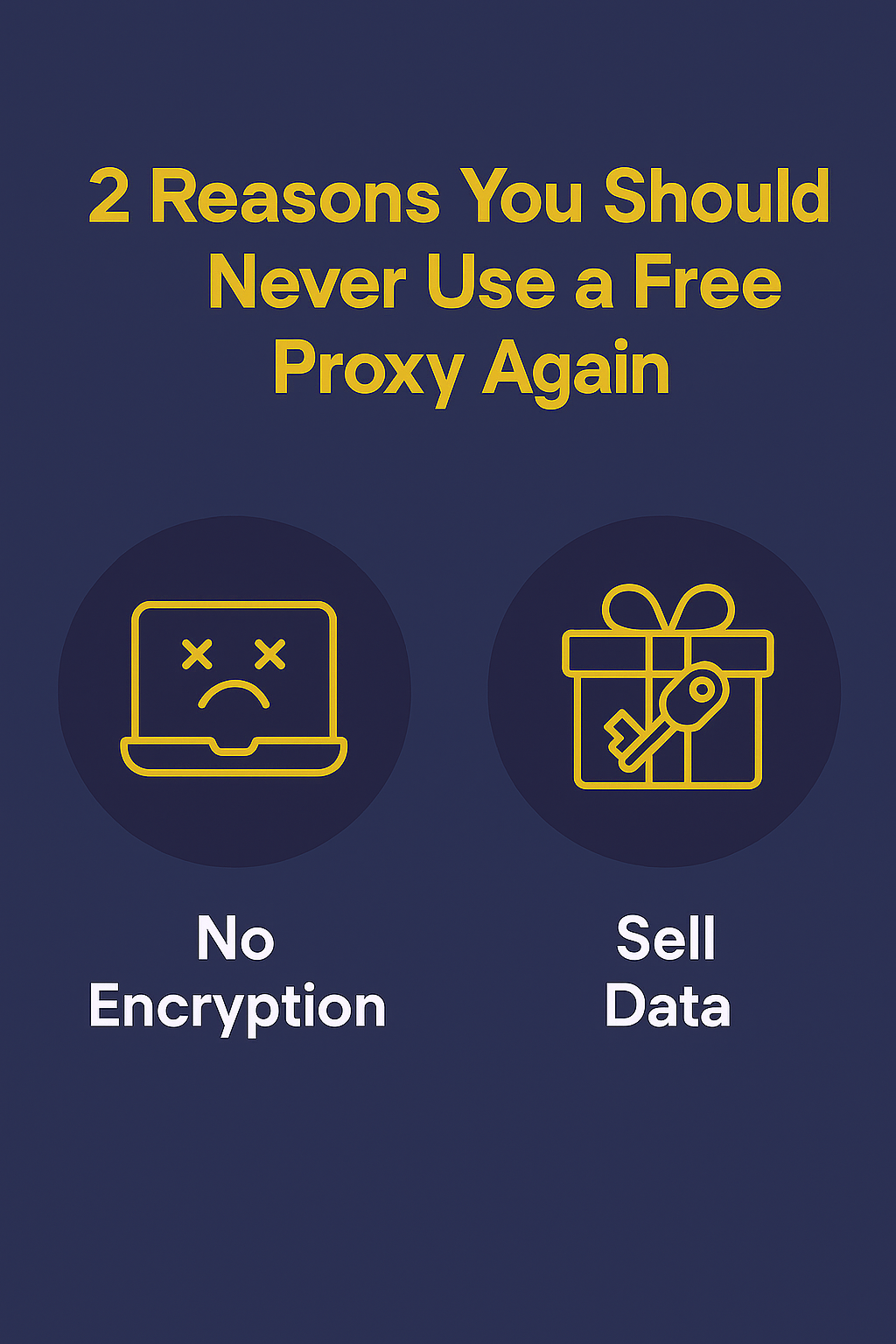
2 Reasons You Should Never Use a Free Proxy Again
Updated for 2025 — Free proxies may sound tempting, but the hidden dangers behind them could cost you your data, security, and even money. In this guide, we’ll explore the two biggest reasons you should never use a free proxy again — and what secure alternatives you should choose instead.
What Is a Proxy Server?
A proxy server acts as a middleman between your device and the internet. When you connect through a proxy, your real IP address is hidden, and your internet traffic passes through another server. This helps improve privacy, bypass geo-restrictions, and speed up certain online activities.
There are several types of proxies used today:
- Datacenter proxies: Fast, affordable IPs hosted in data centers. Ideal for automation, scraping, and sneaker copping.
- Residential proxies: Real household IPs that offer higher anonymity but are more expensive.
- Rotating proxies: IPs that automatically change to prevent detection and bans.
Free proxies typically belong to one of these categories — but come with major risks that outweigh any benefits.
Why People Use Free Proxies
Free proxy servers are often marketed as an easy solution for online privacy or bypassing blocked sites. Students, casual users, and even some businesses use them to access region-restricted content or mask IPs temporarily. However, what looks like a simple solution often hides a dangerous reality.
In 2025, with growing cyber threats and advanced tracking systems, using a free proxy is like leaving your digital door wide open. Here’s why you should avoid them entirely.
Reason #1: Free Proxies Are a Serious Privacy and Security Risk
The number one reason you should never use a free proxy is security. Free proxies are notorious for data theft, malware injection, and identity leaks. Let’s break down how these risks appear in real-world use.
1.1 Data Harvesting and Identity Theft
Most free proxies don’t run on charitable donations — they make money by collecting user data. This includes:
- Browsing history and websites visited
- Login credentials and passwords
- Credit card or payment data
- Location and device information
In many cases, this data is sold to third parties, advertisers, or even cybercriminal networks. You might think your connection is private — but your data is the actual product being sold.
1.2 Malware and Spyware Infections
Some free proxies inject malicious scripts or ads into the websites you visit. These can install malware, adware, or browser hijackers on your device without consent. According to cybersecurity reports, over 60% of “free proxy” sites in 2025 contain harmful code.
Unlike premium proxy or VPN providers, free proxy operators rarely maintain secure infrastructure. Their servers can easily be hacked, leading to data leaks or ransomware infections.
1.3 Lack of Encryption (No HTTPS Support)
Most free proxies don’t support HTTPS traffic. This means your internet connection isn’t encrypted — anyone between you and the proxy server can read your information. That includes ISPs, governments, hackers, and even the proxy owner.
1.4 Example: Real Case of Data Leak from a Free Proxy
In 2024, a group of researchers found a popular free proxy service exposing over 100GB of user data — including emails, passwords, and private messages. The service claimed to “protect anonymity” but was actually logging everything. This demonstrates how dangerous it is to trust your digital identity to a free tool.
Reason #2: Free Proxies Are Unreliable and Inefficient
The second reason you should never use a free proxy is simple — they don’t work well. Reliability, speed, and stability are essential for tasks like streaming, gaming, web scraping, or automation — and free proxies fail in all three areas.
2.1 Slow Speeds and Overloaded Servers
Free proxies are used by thousands of people simultaneously. This causes extreme congestion, slow loading times, and frequent disconnections. Some users even experience speeds below 1 Mbps — barely enough for simple browsing.
2.2 Frequent Bans and Blocked IPs
Free proxy IPs are reused so often that most websites blacklist them automatically. If you try to access services like Google, Amazon, or social networks, you’ll often encounter CAPTCHAs or complete access denial.
2.3 No Customer Support or Maintenance
Unlike premium services, free proxies provide no uptime guarantees, no technical support, and no infrastructure maintenance. Servers can disappear overnight, taking your connection (and sometimes your data) with them.
2.4 Not Compatible with Advanced Tools
Modern automation tools, bots, and scrapers rely on stable IPs and fast speeds. Free proxies break sessions, limit bandwidth, and fail during multi-threaded tasks. If you’re using AI tools for market research, SEO scraping, or sneaker copping — a free proxy will ruin your results.
2.5 VPS Hosting vs Free Proxy Performance
| Feature | Free Proxy | Paid Proxy / VPS |
|---|---|---|
| Speed | Slow, inconsistent | High-speed, optimized |
| Security | No encryption, risky | Encrypted, secure |
| Reliability | Unstable, frequent downtime | 99.9% uptime with monitoring |
| Support | None | 24/7 customer support |
| Payment Options | Free (but unsafe) | Bitcoin, credit card, PayPal |
Better Alternatives to Free Proxies
If you want to stay safe online, consider the following alternatives instead of free proxies:
- Premium Datacenter Proxies: Offer high speed, low latency, and better anonymity. Perfect for sneaker bots, SEO scraping, and automation.
- Residential Proxies: Use real IP addresses from ISPs, making them much harder to detect.
- Rotating Proxies: Automatically change IPs to prevent bans and ensure session continuity.
- Private VPS Hosting: Combine proxies with VPS servers to improve performance, especially for heavy tasks.
- Bitcoin Proxy Payments: Many premium providers accept crypto payments for anonymous transactions — safer and untraceable.
How to Choose a Secure Proxy in 2025
When selecting a reliable proxy or VPS provider, consider the following checklist:
- ✅ Transparent logging policy (no data retention)
- ✅ HTTPS/SSL support for all connections
- ✅ Clear location options (USA, EU, Asia)
- ✅ Accepts Bitcoin or crypto payments
- ✅ 24/7 uptime and customer support
- ✅ Compatible with AI tools, bots, or automation scripts
Some recommended options include SmartProxy, Bright Data, and Oxylabs — all of which offer secure, premium alternatives to risky free proxies.
AI Tools and Proxies: The Modern Combination
As AI automation expands, tools like ChatGPT, Jasper, and SEO content crawlers rely on proxies for large-scale data collection. Using a free proxy in such environments can cause API blocks, false data, and even account bans. Paid proxies with rotating IPs and dedicated VPS infrastructure ensure seamless performance and safety.
Final Verdict: Free Proxies Are Not Worth the Risk
Free proxies might appear convenient, but their hidden dangers make them one of the biggest cybersecurity threats of 2025. Between privacy breaches, malware, and unreliability, using a free proxy is like giving strangers full access to your data.
If you value security, speed, and stability, invest in a paid proxy service or VPS. It’s a small price to pay for real privacy and performance — especially when you can pay anonymously via Bitcoin and integrate automation safely with AI tools.
FAQ: Free Proxy Dangers and Alternatives
1. Are free proxies safe?
No. Most free proxies log your activity, inject malware, or sell your browsing data to third parties.
2. Can I use free proxies for sneaker bots or web scraping?
Not recommended. Free proxies are too slow and get banned quickly. Use rotating or datacenter proxies instead.
3. What’s the difference between a proxy and a VPS?
A proxy hides your IP address, while a VPS gives you a virtual server to run applications. Combining both offers security and performance benefits.
4. How can I pay for proxies anonymously?
Many premium providers accept Bitcoin and other cryptocurrencies, allowing private, secure payments without personal data.
5. Can AI tools detect proxy use?
Yes. Some AI systems detect low-quality or blacklisted IPs. Using premium rotating proxies avoids detection and improves performance.
Conclusion
Free proxies are no longer safe in 2025. Between stolen data, malware threats, and constant performance issues, they do more harm than good. Protect your privacy and efficiency by using verified paid proxies, a private VPS, and modern security tools.
Final Tip: Always choose transparency, encryption, and control over “free” — because in cybersecurity, nothing free is truly safe.