What Is Proxy Hosting? How It Works and Why You Might Need It
Updated for 2025 — Proxy Hosting has become a cornerstone of online privacy, performance, and control. Whether you’re managing AI tools, crypto platforms, or web scraping projects, understanding how proxy hosting works will help you secure and optimize your digital operations.
What Is Proxy Hosting?
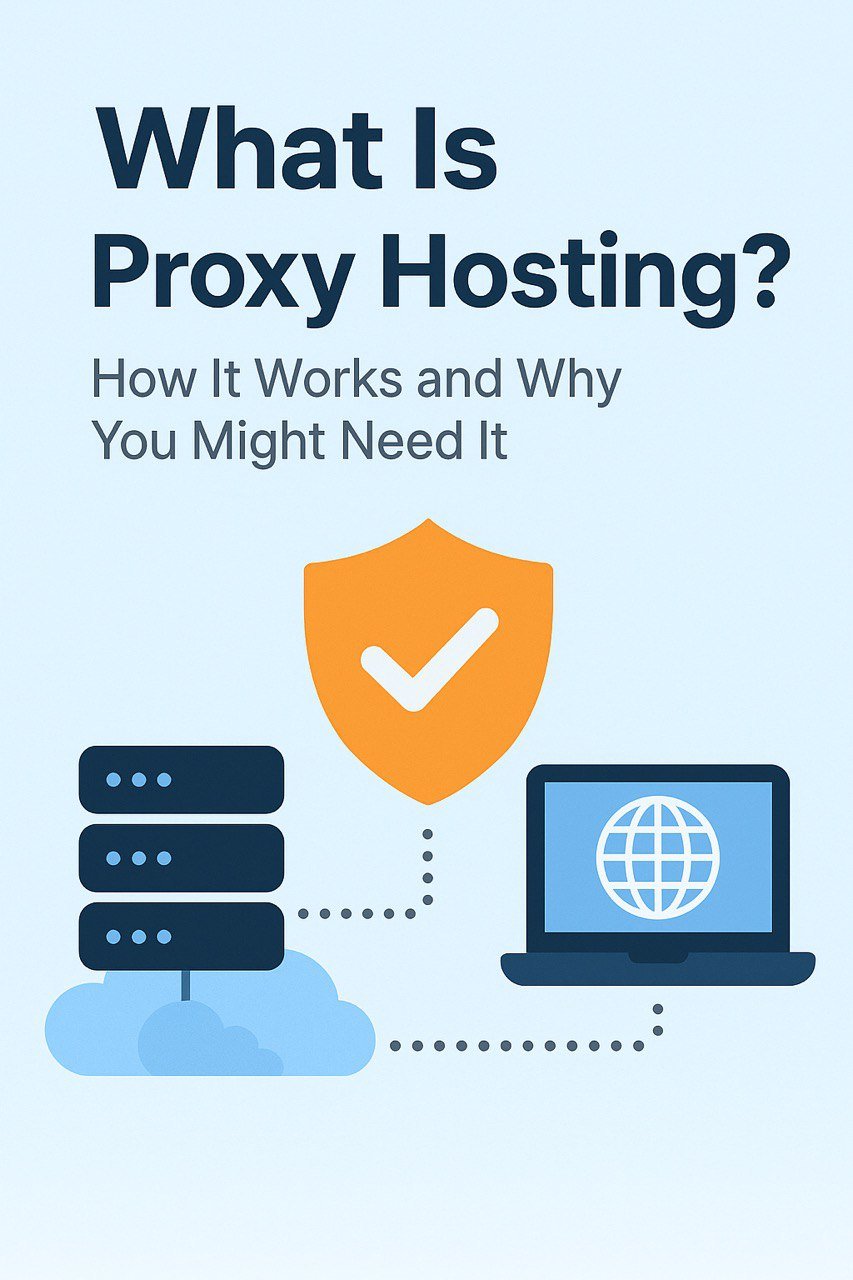
Proxy hosting refers to renting or managing servers that act as intermediaries between a user’s device and the internet. These hosted proxy servers handle all your requests — fetching websites, data, or services — without exposing your real IP address. In essence, the proxy host “represents” you online.
Unlike standard VPNs, proxy hosting gives you full control over configuration, IP types, rotation, and location targeting. Businesses and developers use it to enhance anonymity, bypass geo-restrictions, and manage large-scale automated tasks safely.
How Proxy Hosting Works
When you connect to the internet through a hosted proxy server, your traffic flows through this intermediary machine. It masks your identity and relays your requests to external websites. The process looks like this:
- Your device sends a request to access a website.
- The proxy server receives and forwards that request to the target site.
- The target site responds to the proxy server, not to you directly.
- The proxy then forwards the data back to your device.
Because of this relay, your real IP address remains hidden, while the proxy’s IP is displayed instead. This helps businesses and users maintain privacy, distribute traffic efficiently, and reduce the risk of being blocked or tracked.
Benefits of Proxy Hosting
Using proxy hosting in 2025 offers several advantages beyond basic anonymity. Here are the top benefits:
- Enhanced Privacy: Keep your identity hidden from websites, advertisers, and hackers.
- Faster Access Speeds: Cached proxies can deliver content faster than direct connections.
- Geo-Unblocking: Access region-restricted content or websites without limitations.
- Load Balancing: Distribute heavy workloads across multiple IPs for improved reliability.
- Data Scraping and Automation: Safely run scraping bots and automation scripts without IP bans.
- Better Control: Configure IP rotation, connection type, and authentication for custom use cases.
Types of Proxy Hosting
Depending on your goals, there are different types of proxy hosting available:
1. Shared Proxy Hosting
Multiple users share the same proxy server and IP pool. It’s cost-effective but less private.
2. Dedicated Proxy Hosting
Each client gets a private proxy server and IP address, offering higher performance and security.
3. Rotating Proxy Hosting
Ideal for scraping or SEO projects, rotating proxies change IPs frequently to prevent detection.
4. Residential Proxy Hosting
These proxies use real home IPs, providing authentic user-like access for marketing or automation tasks.
5. Data Center Proxy Hosting
Fast and affordable proxies hosted in data centers — perfect for bulk operations or testing.
Proxy Hosting vs VPS Hosting: What’s the Difference?
While both services involve renting remote servers, proxy hosting and VPS hosting serve different purposes. The table below outlines their main distinctions:
| Feature | Proxy Hosting | VPS Hosting |
|---|---|---|
| Primary Purpose | Privacy, IP masking, and data routing | Hosting websites, apps, or AI tools |
| Control Level | Limited configuration; managed routing | Full server control with root access |
| Performance | Optimized for anonymity and speed | Optimized for computation and hosting |
| Use Case | Web scraping, SEO, privacy, geo-unblocking | Web apps, databases, AI workloads |
| Security | Depends on proxy provider | Fully customizable with firewalls & SSL |
Proxy Hosting for Businesses and AI Tools
Modern businesses use proxy hosting for a wide range of operations — from marketing research to artificial intelligence applications. AI systems that process large-scale data need to fetch information securely and efficiently. Proxy hosting makes that possible by managing connection loads and protecting against IP restrictions.
For example, AI-powered bots analyzing social trends or crypto prices rely on proxies to collect global data safely. Likewise, companies that use machine learning for competitive intelligence use proxies to maintain anonymity and compliance.
Bitcoin and Anonymous Proxy Hosting
With the rise of cryptocurrency, Bitcoin proxy hosting has become a preferred choice for privacy-conscious users. Many hosting companies now accept Bitcoin and other crypto payments, ensuring transactions remain anonymous. This combination of financial privacy and technical anonymity appeals to developers, crypto traders, and digital nomads.
By using Bitcoin to pay for proxy hosting, users avoid revealing personal information tied to credit cards or PayPal accounts. This level of discretion is invaluable for anyone prioritizing data protection in 2025’s hyper-connected world.
How to Choose the Right Proxy Hosting Provider
When selecting a proxy hosting service, consider these essential factors:
- Location Coverage: Choose providers with multiple server locations for global access.
- IP Type: Residential IPs offer higher trust; data center IPs offer better speed.
- Speed and Uptime: Reliable providers should guarantee at least 99.9% uptime.
- Security and Encryption: Look for SSL, IP whitelisting, and strong authentication protocols.
- Customer Support: 24/7 live chat or ticket systems ensure smooth operation.
- Payment Options: Providers accepting Bitcoin or crypto add an extra layer of privacy.
Future of Proxy Hosting in 2025 and Beyond
The proxy hosting industry continues to evolve with AI integration, blockchain verification, and improved automation. Smart proxies can now dynamically switch IPs based on site behavior or latency, ensuring seamless connections. As AI tools, decentralized finance (DeFi), and privacy regulations expand, proxy hosting will remain critical to secure data access and compliance.
In the near future, expect to see hybrid proxy-VPS solutions — combining proxy anonymity with VPS power — tailored for developers, AI engineers, and cybersecurity professionals.
Conclusion
Proxy hosting offers the perfect balance of privacy, speed, and flexibility for both individuals and businesses. Whether you’re managing AI tools, browsing anonymously, or conducting research, having your own hosted proxy server provides the security and control modern online operations demand. As digital threats and data restrictions grow, proxy hosting will continue to be a vital component of the internet’s infrastructure.
Frequently Asked Questions (FAQ)
1. Is proxy hosting the same as VPS hosting?
No. Proxy hosting is designed for data routing and anonymity, while VPS hosting focuses on running full web or application servers.
2. Can I use Bitcoin to pay for proxy hosting?
Yes, many modern hosting providers accept Bitcoin and other cryptocurrencies, offering enhanced payment privacy.
3. What are the best use cases for proxy hosting?
Web scraping, market research, SEO monitoring, automation, and bypassing geo-blocks are the most common uses.
4. Is proxy hosting good for AI tools?
Yes. AI systems that analyze large datasets or perform real-time data crawling benefit greatly from proxy hosting’s IP management and scalability.